
Fashion Design
creative, rigorous
Master of Fine Arts (MFA)
You come to the program with your own compelling idea to explore and then examine it from every angle, with freedom, focus, and intent. Through a process of exploration and discovery, mentored by an experienced faculty, you create your collection and emerge with an understanding of your potential to claim your own space in the field of fashion design.
Who Should Apply
The program welcomes those with an interest in design innovation, including students graduating with a BFA in fashion design and professionals in art and design. The program is also open to applicants with experience in other fields, such as architecture, engineering, and software development.
The Fashion Design Experience
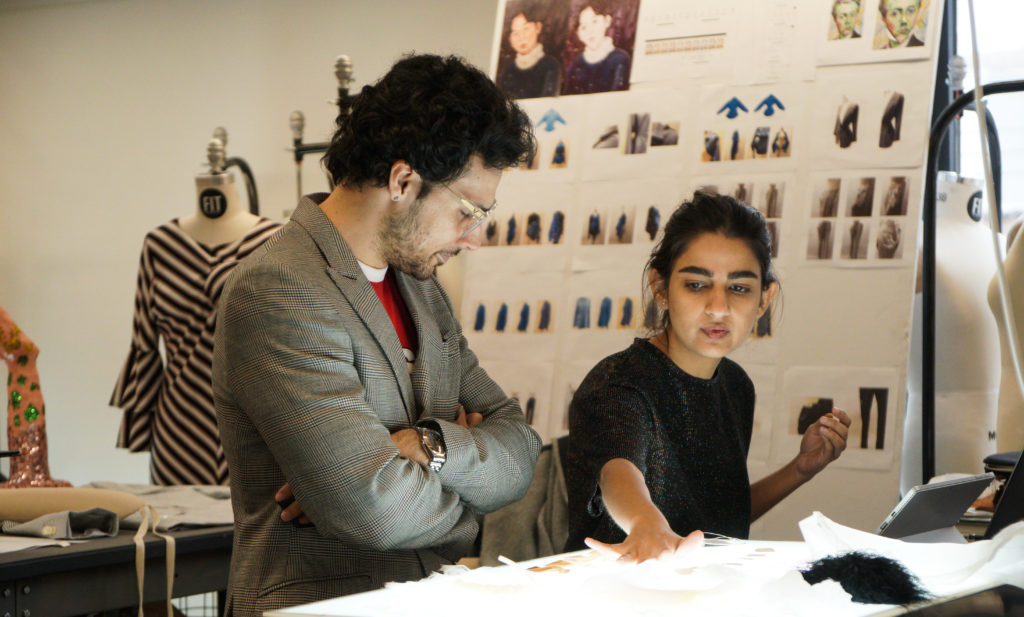
Connect with experienced faculty mentors and industry guest lecturers and critics. Faculty members guide your thesis process. Industry guest lecturers and critics provide practical context and feedback to help focus your work, develop prototypes, and define your market niche.
Explore fashion from an international perspective. Travel to a destination outside the United States for a “Maker Seminar” in which you study local and global production systems.
Present your collection to industry. Through a fashion show, showcase, or other inventive format, you present your collection to industry leaders, influencers, and other key audiences.
More About the Program
Areas of Study
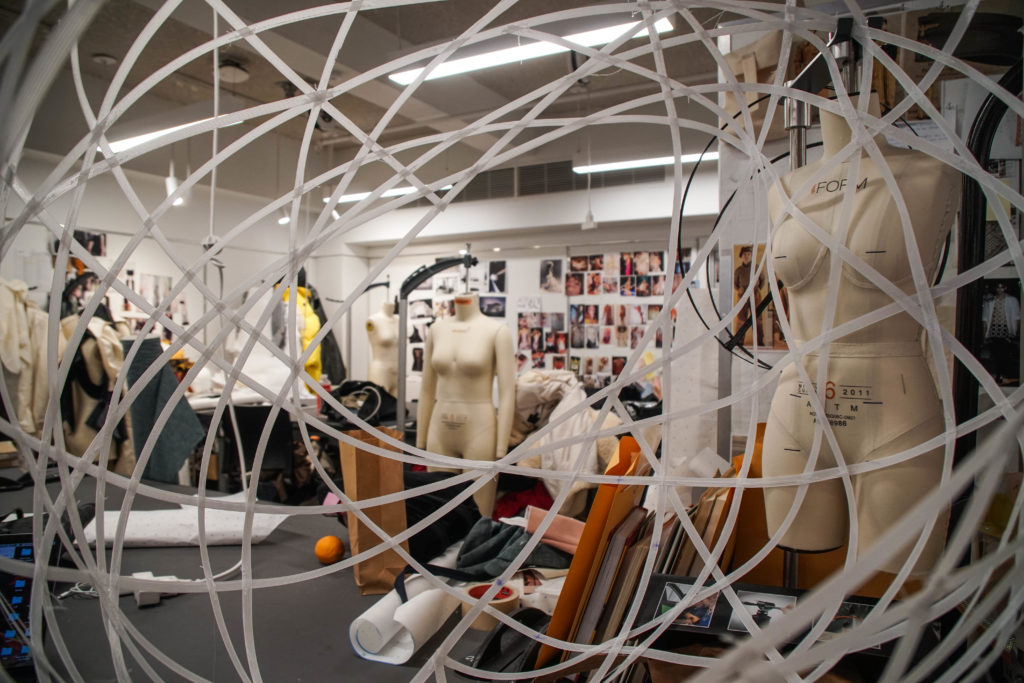
The curriculum encourages original thinking, informed by the interrelationship of design with craft and technology. Students are immersed in practice-based research and actively participate in a collaborative studio environment. Critical issues such as sustainability and design ethics are examined. Business courses provide practical knowledge and insight into current industry models.
FASHION DESIGN THESIS COLLECTION
The heart of the program is a unique four-semester thesis process that allows time to explore, refine, and realize the student’s idea. The student takes the idea through four phases: Play, Focus, Edit, and Conclude, resulting in a visual component and a written component. The visual piece is a collection of eight looks or an equivalent, completed in the Conclude phase. At the end of their final year, students complete a thoughtful paper reviewing the work done during the program. The final thesis collection is presented to an industry panel and a selected audience.
PROGRAM OBJECTIVES
This program offers the time, space, and resources for students to investigate their individual design concepts and realize their own vision. Within a highly structured environment, students have the freedom that leads to innovation in concept, design, fit, cut, construction, silhouette, and materiality. They leave with a viable body of work that reflects their design fluency as formidable makers and articulate influencers in the fashion industry.